

Quebec City Old Town, officially known as Old Québec, brings together Upper Town and Lower Town, with steep streets and stairways linking the two. Start around Governors' Garden, continue to Château Frontenac and Dufferin Terrace, then descend to Place Royale and Petit-Champlain before visiting the fortifications.
Governors' Garden is about a one-minute walk from Manoir Sainte Genevieve.
- Route: Governors' Garden, Upper Town, Lower Town, then the fortifications.
- Getting between districts: Use the steep streets and stairways, or the funicular between Dufferin Terrace and Petit-Champlain.
- Walking surfaces: Expect cobblestones in Petit-Champlain and Place Royale; many other streets have asphalt and sidewalks.
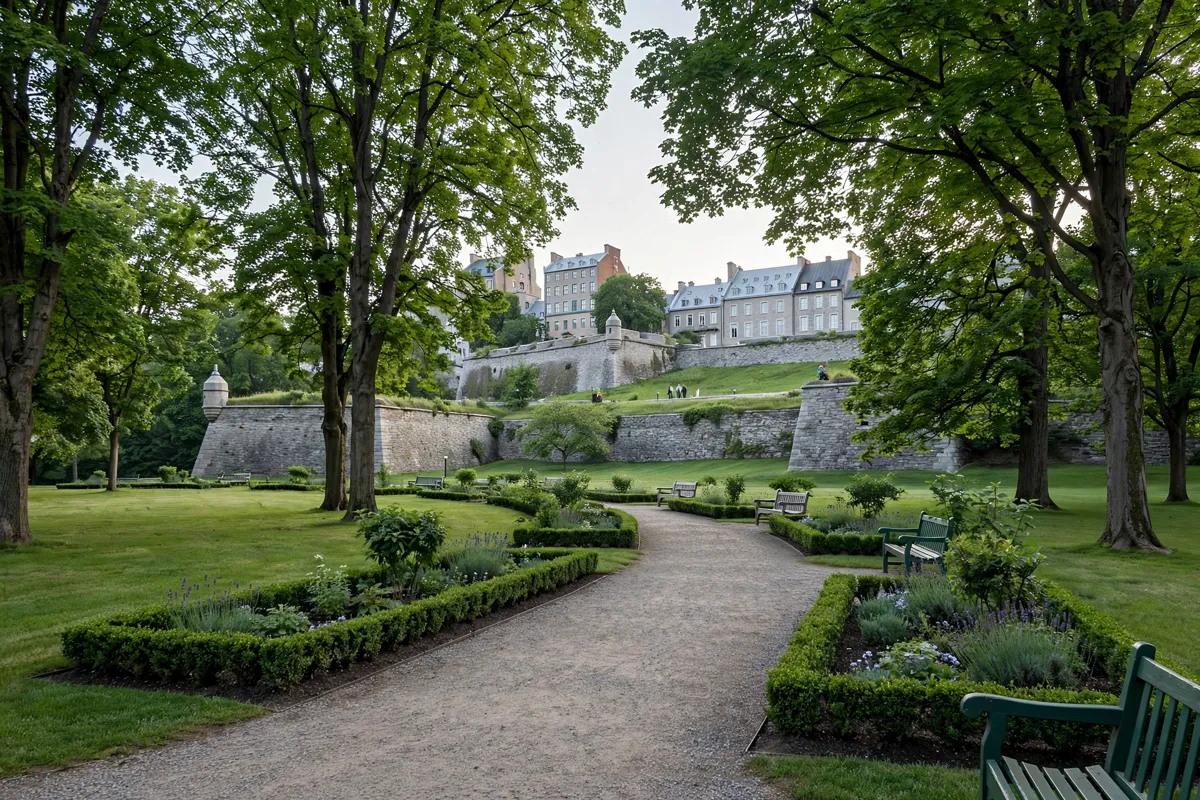
Start near Governors' Garden
Governors' Garden is a convenient place to begin a walk through Upper Town and the Fortifications of Québec National Historic Site.
The garden is part of the historic site, along with Montmorency Park, Dufferin Terrace, the Governor’s walkways, walls and ramparts. From the garden, head toward Château Frontenac and Dufferin Terrace, both in Upper Town. Rue Saint-Louis, rue Saint-Jean and rue Sainte-Anne offer restaurants and boutiques along the way.
For a slower start among green spaces, Governors' Garden and other Old Québec parks fit naturally into this part of the walk.
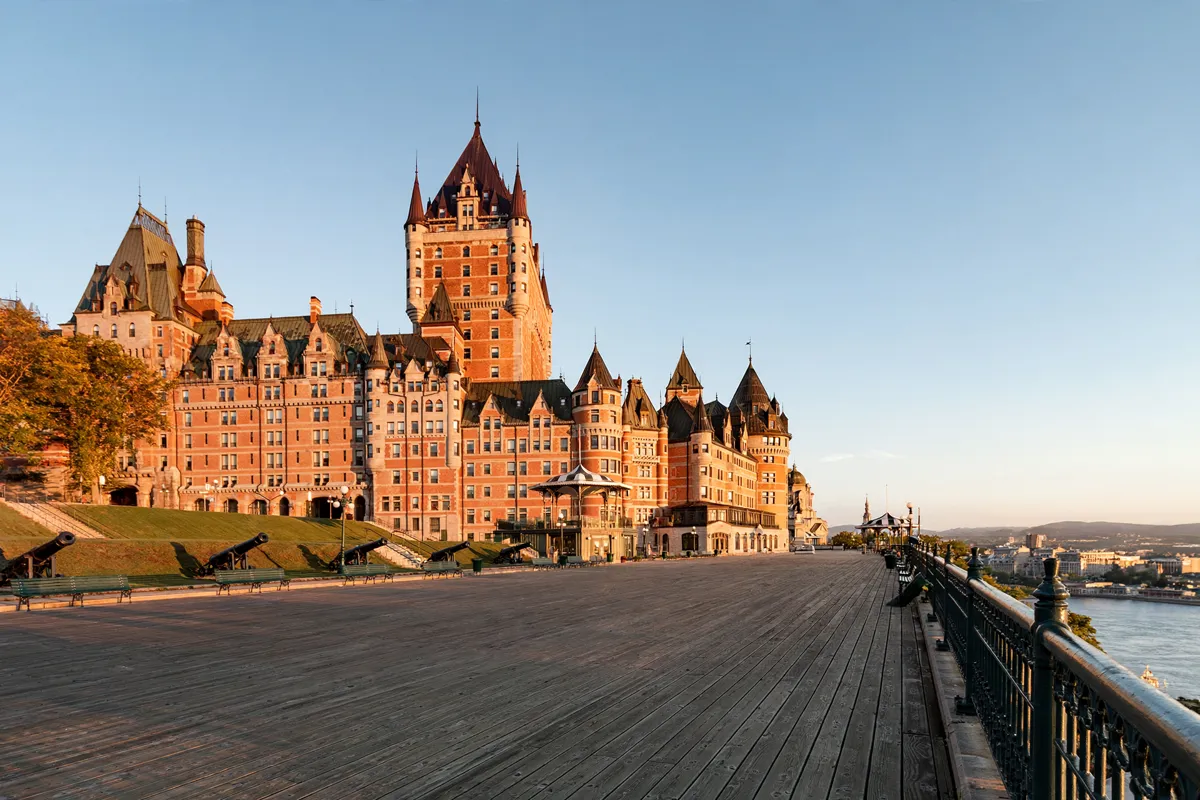
Walk toward Château Frontenac and Dufferin Terrace
Château Frontenac and Dufferin Terrace make a natural Upper Town leg before you descend to Lower Town.
Dufferin Terrace is part of the fortifications site, so you can combine its promenade with the nearby historic walkways and ramparts. If you plan to cover both districts, grouping Upper Town sights together first can reduce repeated climbs: the slopes and stairways between the two areas can make moving back and forth challenging.
The Old Québec funicular connects Dufferin Terrace with Petit-Champlain. Its upper ticket station is on Dufferin Terrace, and its lower station is at 16, rue du Petit-Champlain. Visit Québec City describes the funicular as wheelchair-accessible. The Escalier Casse-Cou is another link between Lower Town and the top of Cap Diamant; stairs were installed there around 1680.
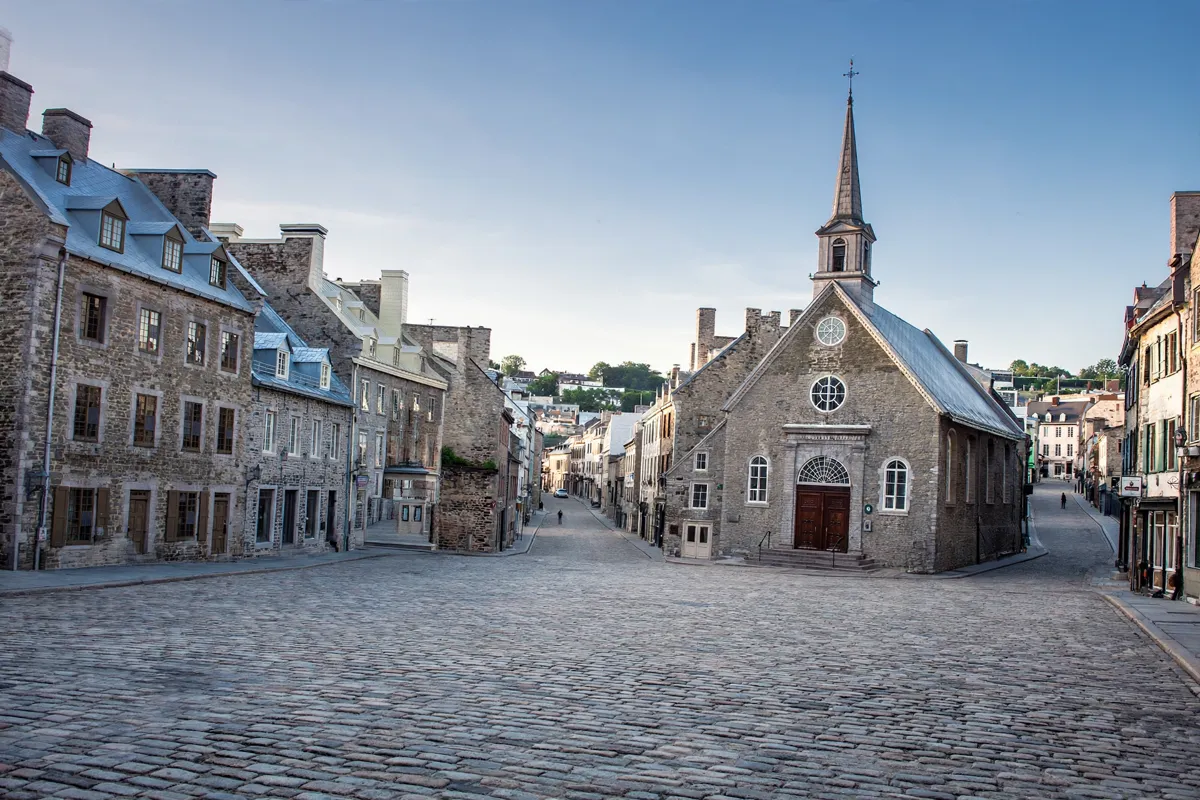
Continue to Place Royale and Petit-Champlain
Place Royale and Petit-Champlain are Lower Town stops, reached by descending from Upper Town on foot or taking the funicular.
Rue du Petit-Champlain is a narrow, cobblestone street below Château Frontenac. Place Royale and Petit-Champlain are close to the Musée de la civilisation, another Lower Town landmark. You can keep this part of the route together rather than climbing back to Upper Town between stops.
The historic buildings around Place Royale and the lanes of Petit-Champlain give this section a different feel from the broad terrace above. For a closer look at this district’s landmarks, the walk through Place Royale and Petit-Champlain focuses on the same Lower Town area.
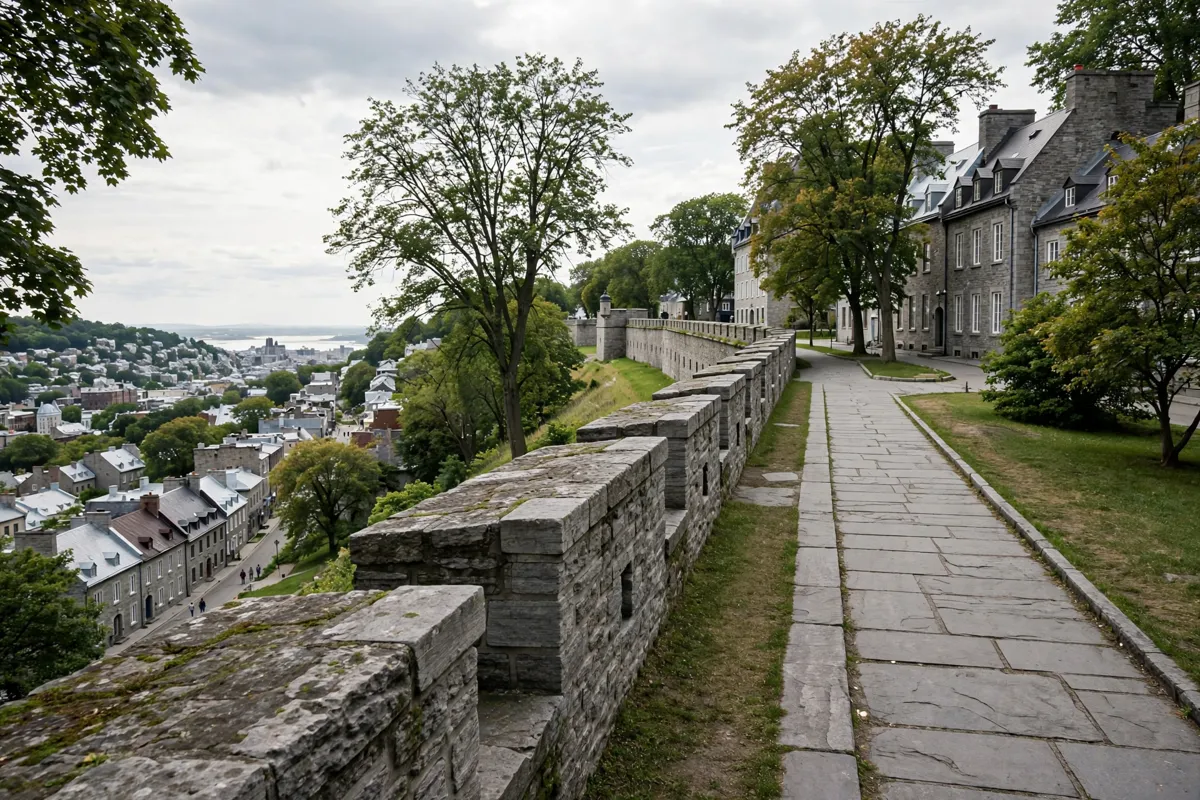
Add the fortifications and historic sites
The Fortifications of Québec National Historic Site traces the defensive system around Old Québec’s Upper Town.
Parks Canada describes a site with four gates, three Martello towers and 4.6 km of ramparts. The fortification system was built between 1608 and 1871, and the site is accessible year-round.
Its address is 2 D’Auteuil Street, Québec, QC G1R 5C2. Buses 3, 11, 21, 25, 28, 37, 800, 801 and 807 serve the area; there is no parking at the historic site, though paid parking is available nearby.
Other historic stops include the Lieu historique national des Forts-et-Châteaux-Saint-Louis, Maison historique Chevalier and Musée de la place Royale. The Citadel of Québec offers another look at the city’s military history; its historic fortress visit can help you plan that separate stop.
Plan for hills, weather and walking time
Plan your walk by district, since steep slopes, stairways and varied street surfaces affect how easily you can move between Upper Town and Lower Town.
Visit Québec City says most streets outside Petit-Champlain and Place Royale are asphalt with sidewalks, though some sidewalks are uneven. The cobblestones in those two Lower Town areas may take extra time to navigate in a motorized wheelchair; visitors sensitive to vibration or using a manual wheelchair may prefer a companion’s assistance.
If you prefer not to take the steep route between districts, the funicular connects Dufferin Terrace and Petit-Champlain. A seasonal shuttle also serves as an alternative, but its operating dates and hours vary. Some Old Québec streets close to car traffic on summer weekends, giving pedestrians more room to walk.
Before you go: Hours and access arrangements can change, so check the official site before you go. Parks Canada provides information for the fortifications, and Visit Québec City covers local sightseeing and transport.
FAQs
Are Upper Town and Lower Town connected on foot?
Yes. Steep streets and stairways connect the two districts, and the funicular links Dufferin Terrace with Petit-Champlain.
Is the Old Québec funicular wheelchair-accessible?
Visit Québec City describes the funicular as wheelchair-accessible. Cobblestones in Place Royale and Petit-Champlain may take extra time to navigate.
How long are the fortifications?
The ramparts extend for 4.6 km around Upper Town, and the national historic site is accessible year-round.